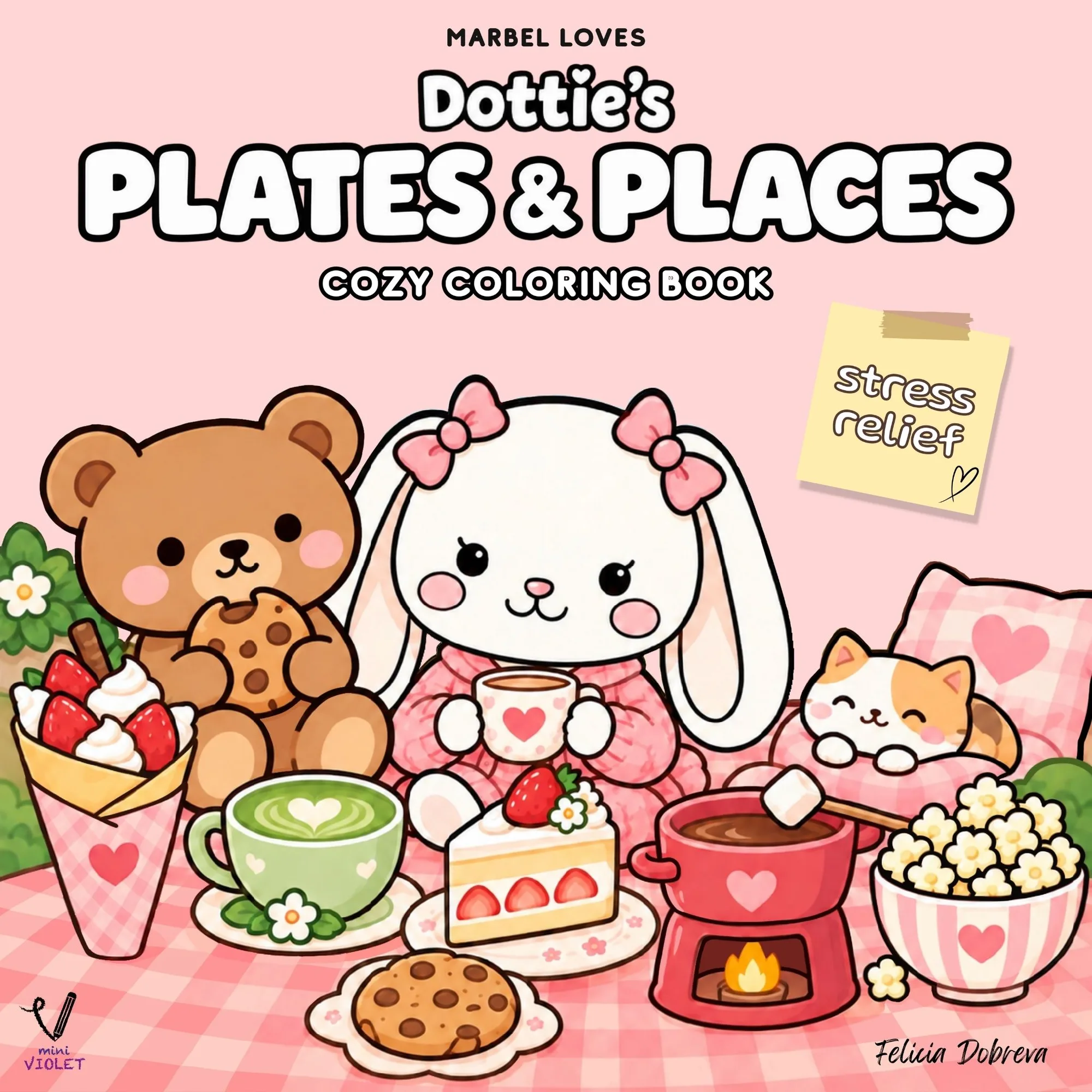
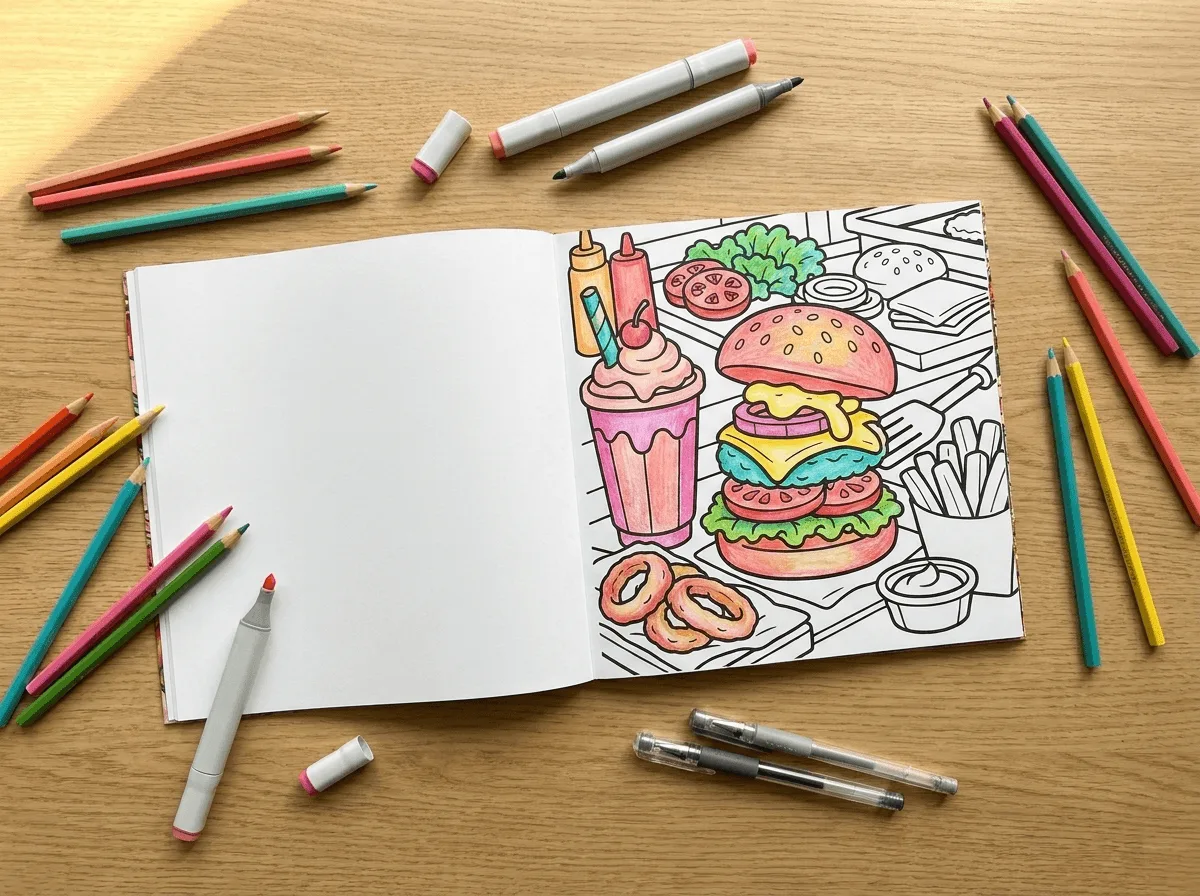
The book is on the shelf. You bought it yourself or received it as a gift, and it's so beautiful that you're afraid to touch it. Three times you've searched the internet for “which markers are good for colouring books”, read contradictory opinions and put it off, because you're not sure you have the right tools. Meanwhile, the book sits there.
If that sounds like you, it's worth knowing that the question about tools often hides another, quieter one: am I allowed to begin? What if I ruin it? Below, I answer both.
The short answer: coloured pencils are the safest choice, because they rarely bleed through the page and are easy to correct. Water-based markers and fine liners give fuller colour, but are worth testing first. Alcohol markers go through almost any colouring-book paper. Gel pens are good for details, but smudge easily. If you haven't decided, start with pencils.
Why a beautiful page scares us
Jacqueline Rifkin, a marketing researcher, together with Jonah Berger described a mechanism almost all of us live through. When we once decline to use something, we tell ourselves we're saving it for the right occasion. The longer we postpone it, the more special it seems and the harder it is to “risk”. They called this the specialness spiral.
In one of their experiments, 121 participants received a new notebook. Those who had had the chance to use it and ignored it were less willing to use it later, compared to those who had never had that choice. The same pattern showed up with bottles of wine and TV episodes.
It's not a lack of courage, nor of talent. It happens to you with any beautiful thing you've started saving “for later”. The researcher proposes a simple antidote: decide in advance when you'll use it — this evening, for instance, not at an occasion that never comes.
A coloured page is the book's purpose
All you can ruin in a colouring page is one page. The book was printed to be coloured — with smudges, with colour outside the lines, with a shade that clashes with its neighbour. In a year's time, a book without a single mark means nothing. A book with used pages means evenings when you were there.
Start from the middle
A trick artists use when the blank page blocks them: don't start with the first page. Pick one from the middle of the book and a small corner of it — a flower, a bow, a button. The beginning feels less solemn when it isn't the beginning.
The three tools, in short
Coloured pencils
They're the gentlest choice for a start. They erase more easily than ink, don't bleed through the page and give you control: press lightly for a pale colour, harder for an intense one. There are two types. Wax-based ones are softer, blend easily and break more easily. Oil-based ones are harder, keep a sharp tip and ask for several thin layers to reach the same smooth look.
A simple trick: lay down several light layers instead of one heavy one. The colour comes out deeper and the paper doesn't suffer.
Markers
They give full, quick colour. Water-based ones bleed through the page less than alcohol-based ones, but they can warp or fluff the paper if you go over the same spot too much. Alcohol markers blend beautifully, but they spread into the paper fibres and usually show on the back, even on many thick papers. If you use them, always put a sheet underneath.
Gel pens
Their thick, water-based ink sits on top of the paper more than in it. They're good for small details, sparkle or points of light over other colours. They have one drawback: they dry slowly and can smudge, so wait a little before turning the page.
How to test, without fear
Choose an unimportant area: the last page of the book or a small corner of a page you don't love that much anyway.
Make one stroke with each tool and let them dry for a minute.
Turn the sheet over and look at the back. If you see only a shadow, it's fine. If the ink has come through, use those tools only with a sheet underneath, or set them aside.
Put a sheet of paper under the page you're colouring. That protects the next page even if the test went well.
There's no point searching for the perfect tool any longer. The two-minute test tells you more than any review.
About the “ruined” page
It will happen. A colour will slip outside the lines, a marker will leave a stain, a shade won't go with its neighbour. What do you do then? Carry on. I suggest you leave the stain there and finish the page. A page with a mistake, seen through to the end, is worth more than a perfect one that never began.
I draw the pages with thick lines and large areas precisely so there's room for that. In my colouring evenings, with Marbel in my arms, I don't check whether I stayed inside the lines. I only check whether I was there.
A thought for the ending
You don't need forty markers, special paper or the right moment. You need one page and ten minutes. If you have a book waiting for you on the shelf, take it down this evening, choose the page from the middle, pick up the pencils you already have, and begin.
If you feel like it, show us the page — outside-the-lines bits included — with @marbel.loves. And if you're wondering whether it's worth the effort, also read “Does Adult Coloring Really Relax You? What Studies Say”.
Sources
Rifkin, J., “Psychological ‘specialness spirals’ can make ordinary items feel like treasures”, The Conversation, 2021: https://theconversation.com/psychological-specialness-spirals-can-make-ordinary-items-feel-like-treasures-and-may-explain-how-clutter-accumulates-165863
Berger, J., interview about the things we don't use, Wharton Knowledge: https://knowledge.wharton.upenn.edu/podcast/ripple-effect/the-psychology-of-hoarding-jonah-berger/
“How to Triumph Over the Blank Page”, Psychology Today, 2024: https://psychologytoday.com/us/blog/the-naked-creative/202407/how-to-triumph-over-the-blank-page
Clark, S. R., guide to wax- and oil-based pencils: https://sarahrenaeclark.com/?p=91160
Materials guide for adult colouring books (paper and markers): https://artincontext.org/best-markers-for-coloring/